EV servicing is reshaping garage calls: quotes, bookings, expectations
What EVs change on your phones: more diagnostics, fewer oil changes, new booking patterns and expectations. Call scripts and AI tips for UK independents.
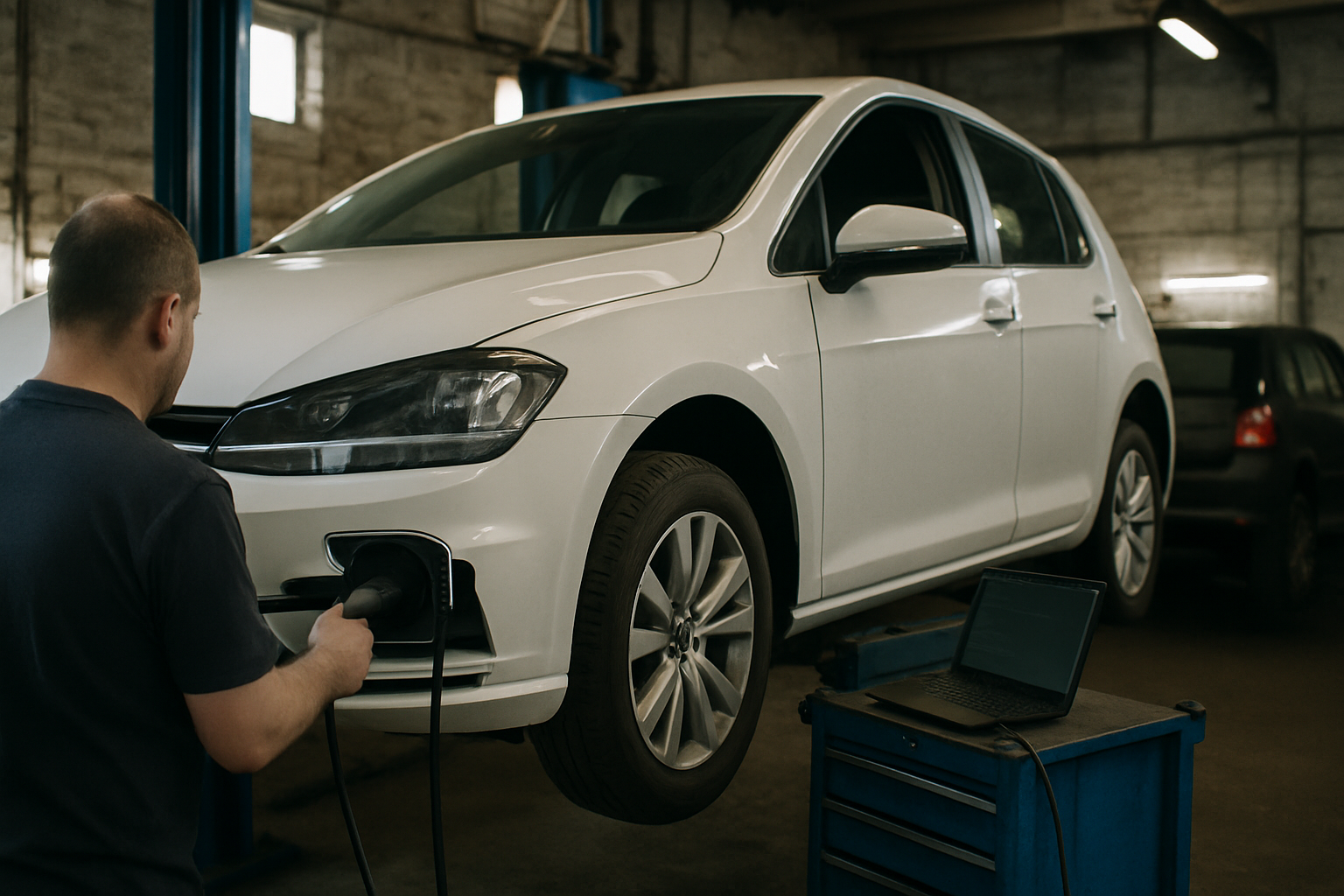
Electric vehicles haven’t just changed what happens on the ramp; they’ve changed the phone. Independents are now fielding different questions, different quote requests and new expectations about proof of competence and availability. Here’s what’s really shifting, and how to handle it smoothly — whether a human answers or an AI receptionist does.
What’s changed in the call mix
A growing share of inbound calls are no longer “oil and filter” or “my MOT is due”. EV callers typically ask about:
- Routine EV checks: brake service, tyres, cabin filters, pollen filters, air-con, coolant for thermal management, and inspections aligned to OEM schedules.
- Diagnostics: high-voltage system warnings, reduced power messages, charging faults, squeaks from electric drivetrains, software update prompts.
- Tyres: faster wear on some EVs drives more enquiries about load ratings, EV-marked tyres, and availability for same-day fitting.
- Warranty and safety: “Will this keep my warranty?” “Are your techs EV trained?” “Do you have an isolated bay?”
- Convenience: loan cars vs courtesy EVs, while-you-wait slots, on-site charging so they don’t leave low.
What drops away: ad hoc top-ups and frequent interim services. Service intervals can be longer, which means fewer but more “what exactly is included?” calls. Expect more pre-book research and fewer immediate “can you do it now?” requests — except for tyres and warning lights, which still come in hot.
Practical adjustment: keep a short list by the phone (or in your AI’s script) of EV do’s and don’ts your garage handles. Be explicit about what you don’t do (home charger installs, battery module repairs if you don’t), and point callers to the right trade when needed. Clear boundaries reduce callbacks.
Quotes: fewer fluids, more scope — how to price on the phone
Quoting EV work is less about parts baskets and more about defining scope. The trap is giving a flat price before confirming what the customer actually needs and what the vehicle supports.
On the call, capture:
- Reg and mileage (to pull the right service schedule).
- Exact model and battery size/derivative (some items differ by variant).
- Symptoms for faults: what the dash says, when it happens, weather/temperature, charging method (home/public), and any recent software updates.
- Tyre details: current size, load/speed rating, EV-marked preference, and whether they need mobile vs in-bay.
- Warranty status and service history (to decide OEM schedule vs condition-based tasks).
For fixed service items, build quote templates per model family. For diagnostics, price the initial assessment clearly and state what it covers (e.g., up to X minutes of guided tests and HV safety checks), then explain next steps if further work is needed. Avoid guessing at software-related labour over the phone.
Phrases that work:
- “Happy to price the inspection first. That includes high-voltage safety checks and a full fault-path test. If it needs more time or parts, we’ll call before any spend.”
- “There are two schedules for your model at this mileage. Let’s confirm which applies so you’re not paying for work it doesn’t need.”
- “We stock EV-rated tyres in your size; if you prefer a specific label rating or brand, say so and we’ll price both.”
AI receptionist angle: an AI can collect the reg, describe what’s included in a “diagnostic first” approach, and send a quote summary by SMS/email while the caller is still on the line. The handoff to a human should trigger only when the caller asks for brand recommendations or exception pricing.
Booking patterns: EV bay constraints and while‑you‑wait expectations
One EV-capable bay and a couple of Level 3/4 Techs can bottleneck your diary. Calls tend to:
- Book further ahead for routine EV services, to land with an EV tech.
- Demand same-day or next-day for tyres, charging faults or warning lights.
- Ask for “while-you-wait” more often, especially for tyres and inspections.
Set simple booking rules on the phone:
- Routine EV services: book into EV-trained tech slots; group similar models for efficiency where possible.
- Diagnostics: reserve first slot of the day so decisions and parts ordering happen same day.
- Tyres: hold two emergency fit slots per day; release them at 10:30 and 15:00 if unused.
Pre-visit checks to avoid wasted trips:
- “Please bring the locking wheel nut key.”
- “If we’re checking the charge port latch, bring the cable.”
- “If you’re low on charge, let us know so we can plan any road test.”
AI receptionist angle: an AI can follow these rules without emotion — it won’t squeeze a high-voltage job into a non-EV slot “just to help”. It can also offer the next EV-capable appointment automatically and capture special notes that appear on the job card.
Customer expectations: competence, clarity and evidence
EV owners often want proof, not promises. Tackle this head-on:
- Safety and training: state that high-voltage work is carried out by trained staff and that the vehicle is made safe before inspection. If you have formal certificates on display, the receptionist can mention that they’re visible at drop-off.
- Warranty retention: reassure callers you follow OEM schedules and use appropriate parts and fluids. Don’t imply you can perform recall or campaign software updates unless you actually can.
- Scope transparency: list what’s in the service. “Inspection, brake service as required, cabin filter, coolant checks, software checks where supported.”
- Charging on site: if you have a charger, say whether it’s for customer use and any limits. If not, tell them the nearest public option.
AI receptionist angle: the AI can answer these questions consistently, send a follow-up message with what’s included, your EV policy, and a photo or link if you prefer. It should also deflect out-of-scope issues (home charger faults) to the right trade politely.
How AI should handle EV calls (without irritating owners)
EV callers are often detail-oriented and expect quick, accurate answers. Good AI behaviour looks like this:
- Identify the vehicle early: ask for reg up front and confirm it’s an EV before quoting.
- Confirm capability: “Yes, EV-trained technicians on site. High-voltage work is made safe before inspection.”
- Set scope and price type: fixed price for routine EV service templates; staged pricing for diagnostics.
- Apply booking rules: only offer EV-capable slots; prioritise tyres and warning lights appropriately.
- Capture context: warning messages verbatim, charging type used (home/public), weather/temperature when faults occur, recent updates, and any aftermarket kit fitted.
- Manage expectations: “Initial diagnostic covers X; if deeper work is needed, you’ll get a call first.”
- Smart handoffs: escalate to a human for brand preferences, goodwill/warranty questions, or if the caller sounds uncertain about safety.
Trade-offs to be aware of:
- Over‑qualification annoys people. Keep questions tight and relevant to the symptom.
- Over‑promising timescales backfires. If the EV bay is constrained, the AI should say so and offer the first realistic slot plus a cancellation list.
- Script bloat kills clarity. Build separate EV flows for service, tyres and diagnostics, not one mega‑script.
If missed calls, evening rings and tyre panics are common in your shop, adding an EV‑aware AI receptionist that books straight into your diary will steady the front desk without hiring another pair of hands. See how UK garages use it at /case-studies or try it via /get-started.
See ReceptionMate handle your calls
AI receptionist built for UK garages — books straight into your diary, 24/7, with no contract.
Get started